
Why does postpartum hair shedding start after the newborn stage?
Pregnancy changes the usual balance between growing and resting hairs. Higher estrogen levels can keep more strands in the growing phase, so hair may feel unusually full. After delivery, hormone changes allow many of those hairs to enter the resting phase together. The visible shedding comes later, which explains why hair can look fine immediately after birth and then suddenly seem everywhere.
This process is called postpartum telogen effluvium. It usually affects the scalp broadly rather than creating a single smooth bald patch. When discussing PRP in Raymore, separate this temporary release of resting hairs from conditions that progressively reduce hair density. A dramatic shower drain alone cannot tell you which process is present.
What is a normal postpartum hair-loss timeline?
Noticeable shedding often begins around two to four months after delivery and can peak around the fourth month. Many women recover their usual fullness by their child’s first birthday. These are broad clinical patterns, not a promise that every scalp will look restored on the same date. The American Academy of Dermatology describes this temporary postpartum pattern.
Shedding can ease before your ponytail feels thicker because new strands need time to gain length. Short hairs along the forehead may represent recovery, although broken hairs can look similar. For postpartum hair loss in Raymore, the direction of change matters more than comparing your appearance with someone else’s postpartum photograph.
- Early months: record when shedding began and whether other symptoms appeared.
- Later months: look for a gradual reduction in shedding and emerging growth.
- Around the first birthday: seek assessment if fullness has not returned or the pattern remains concerning.
When is postpartum hair loss not something to simply wait out?
Smooth bald patches, painful areas, persistent redness, marked scaling, or a shiny scar-like scalp do not fit a straightforward reassurance-only discussion. Arrange a medical assessment rather than assuming childbirth explains everything. Significant thinning that began before pregnancy also changes the question: the postpartum shed may be revealing an older problem.
Unusual fatigue, cold intolerance, palpitations, dizziness, or unexplained weight changes should be discussed with your postpartum clinician or primary care professional. These symptoms do not diagnose a thyroid or iron problem, but they justify attention. PRP hair restoration in Raymore cannot substitute for investigating symptoms that affect your whole body.
Real results
PRP Hair Restoration before & after at KC Injectables Med Spa
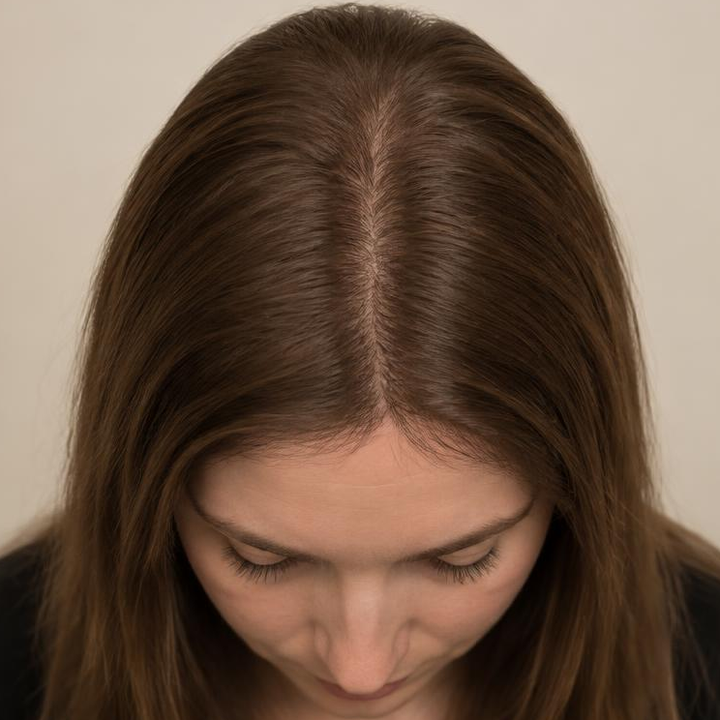
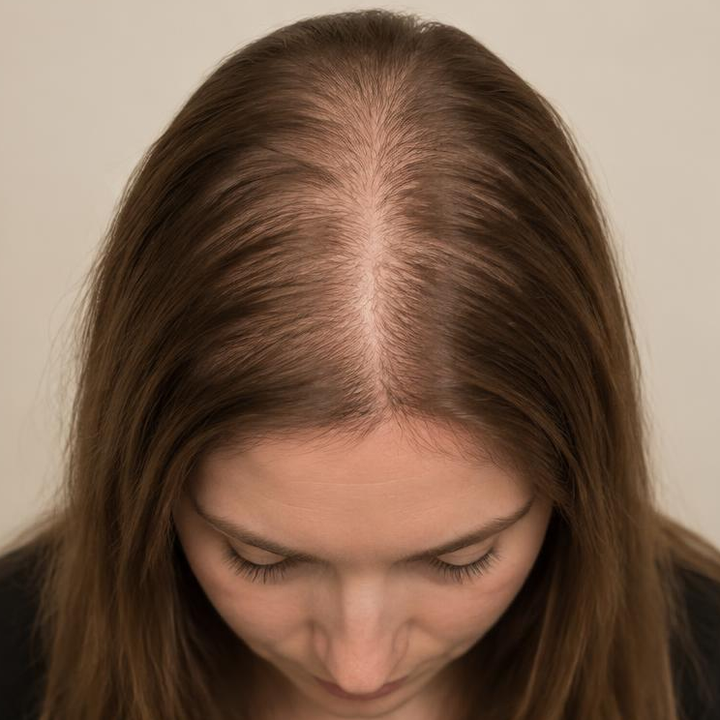
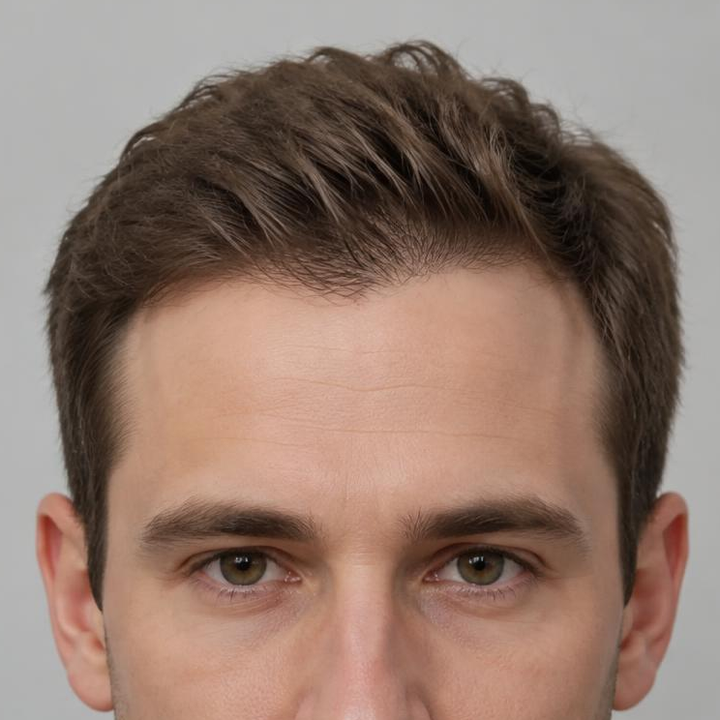
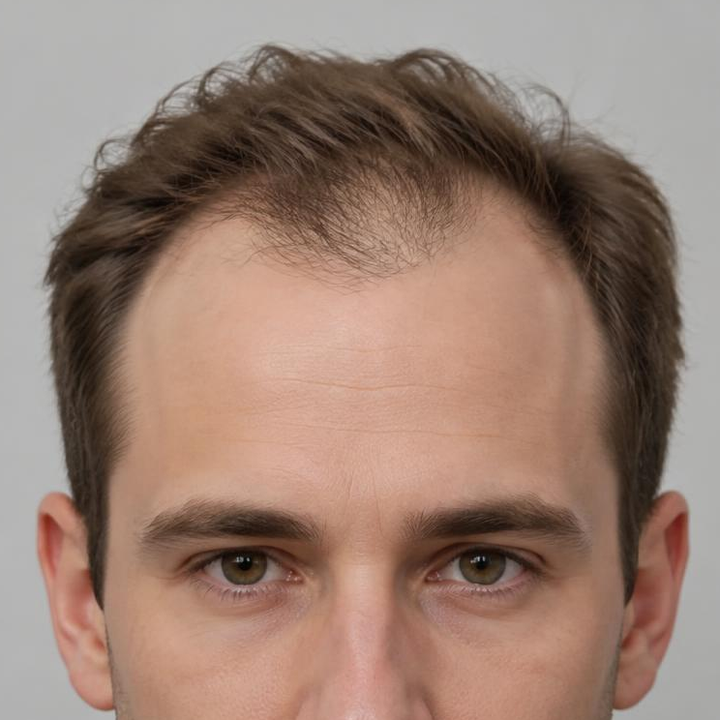
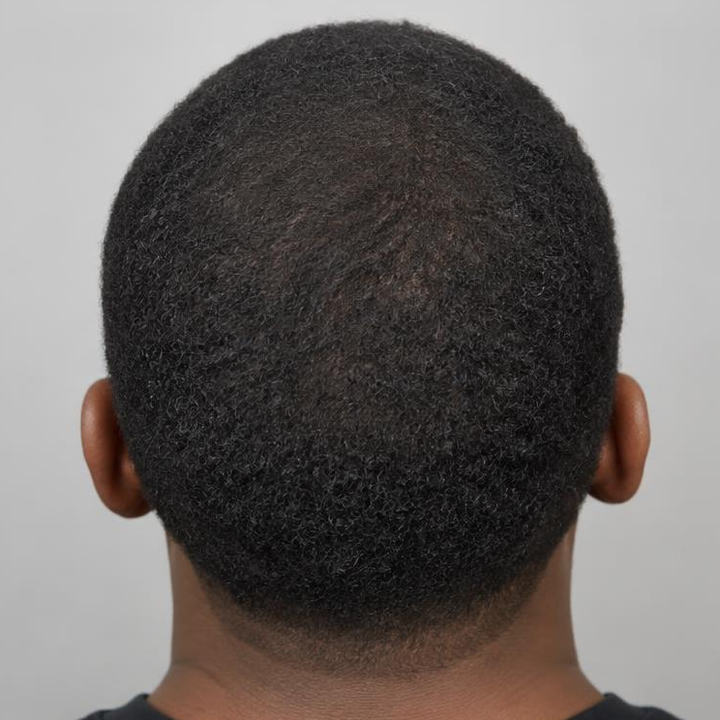
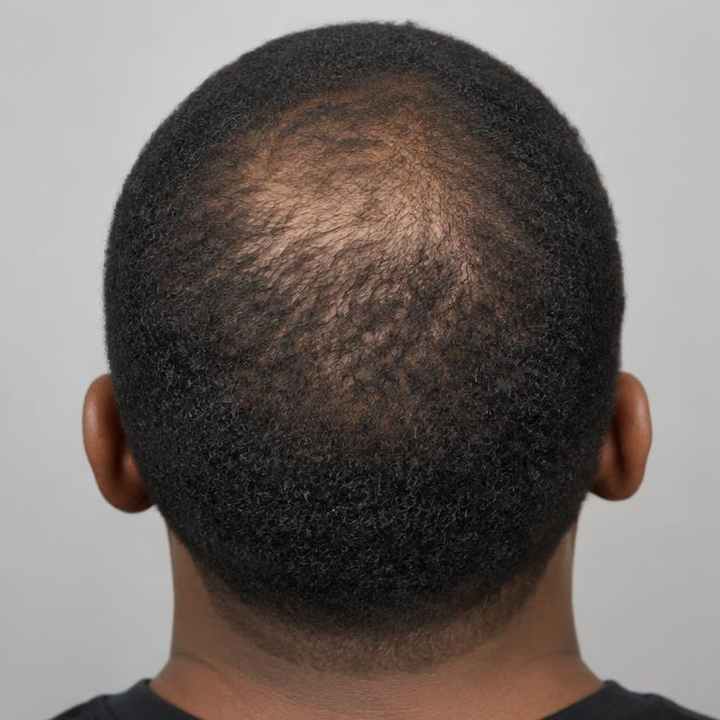
Swipe each photo to compare. See every prp hair restoration before & after or browse the full before & after gallery.
Could iron deficiency or postpartum thyroid changes be involved?
Blood loss around delivery, limited food intake, and other health factors can contribute to iron deficiency. Postpartum thyroid dysfunction can also occur during the year after birth. Either issue can overlap with shedding, making it important to describe your birth recovery and current symptoms instead of treating the scalp as an isolated cosmetic concern.
Your medical clinician decides whether blood counts, iron studies, thyroid testing, or other evaluation fits your history. There is no universal laboratory bundle that every person seeking PRP in Raymore must buy. Bring existing results when available, and do not start high-dose iron simply because an online hair-loss checklist recommends it. The hormone care overview describes a separate service; ordinary postpartum shedding does not itself establish a need for hormone treatment.
- Mention significant bleeding, restrictive eating, recent illness, and medication changes.
- Bring your current supplements and relevant postpartum medical records.
- Ask who will interpret abnormal results and coordinate any needed treatment.
Can childbirth uncover female pattern thinning?
Yes, temporary shedding can make previously subtle pattern thinning more visible. A widening central part that existed before pregnancy, a family history of progressive thinning, or density that keeps declining after the heavy shed settles may suggest an additional process. That possibility needs examination; it cannot be confirmed from a phone photograph alone.
This distinction matters for PRP hair restoration in Raymore because PRP research is stronger for androgenetic, or pattern, hair loss than for ordinary postpartum shedding. A provider should explain which condition they are addressing. Restoring a normal hair cycle and managing ongoing miniaturization are different goals, even when they occur on the same scalp.
Where does PRP actually fit for postpartum hair loss in Raymore?
PRP stands for platelet-rich plasma, a preparation made by processing a blood sample to concentrate platelets. Injecting that preparation into selected scalp areas aims to support follicle activity through platelet-associated signaling. It does not replace missing iron, normalize thyroid function, or eliminate the biological transition after pregnancy.
For uncomplicated postpartum shedding that is already improving, observation may be the most sensible choice. PRP may be considered when an assessment identifies coexisting pattern thinning or persistent concerns after other contributors are addressed. The Raymore PRP hair restoration overview provides a starting point, but it is not a diagnosis or a reason to treat every new parent.
Your closest spa
KC Injectables Med Spa Lee's Summit
286 Southwest Blue Parkway, Lee's Summit, MO 64063
(816) 301-4226Does research prove that PRP speeds normal postpartum recovery?
No, evidence is not strong enough to promise that PRP accelerates routine postpartum recovery. Studies of other hair-loss conditions cannot automatically establish benefit for a temporary shed that usually improves naturally. Before-and-after images are particularly hard to interpret when the untreated condition would also be expected to change over several months.
A responsible conversation about PRP for postpartum hair loss in Raymore should include that uncertainty. Ask what benefit is plausible for your specific diagnosis and what would happen without treatment. Browse PRP hair restoration results for perspective, while remembering that a gallery does not establish postpartum effectiveness or predict your outcome.
Can you have PRP while breastfeeding?
Breastfeeding calls for individualized review, not an automatic yes based on the phrase “your own blood.” Direct evidence about elective scalp PRP during lactation is limited. The procedure may also involve skin preparation, an anticoagulant in the collection system, numbing medication, and aftercare products, each of which belongs in the discussion.
Tell the treating clinician that you are breastfeeding and share relevant infant health details with your maternity or pediatric care team when needed. Ask whether postponing elective treatment makes more sense. For PRP in Raymore, neither stopping breastfeeding nor discarding milk should be suggested casually; any feeding-related instruction needs a specific clinical rationale.
- Ask exactly which products and medications would be used.
- Discuss current pregnancy, possible pregnancy, and plans for another pregnancy.
- Request a clear explanation if treatment is deferred during lactation.
What can Raymore parents do while the hair cycle recovers?
Gentle hair care can reduce breakage without preventing the normal release of resting hairs. Keep scalp concerns distinct from cosmetic skin-care services, which do not diagnose postpartum shedding. Use a comfortable brush, ease up on tight ponytails or extensions, and limit damaging heat or chemical processing. Washing is not the cause of postpartum telogen effluvium; loose strands often become visible during shampooing because they were already ready to shed.
Adequate meals matter more than buying every supplement marketed for postpartum hair loss. Include protein-containing foods and discuss dietary gaps with your clinician, particularly if recovery, feeding demands, or nausea make eating difficult. PRP in Raymore should never be sold as a substitute for nutrition, and extra vitamins are not automatically useful when no deficiency exists.
How do you choose between observation, medical care, and PRP?
Start with the pattern and symptoms, then decide what kind of help fits. Recent diffuse shedding without scalp symptoms may support observation and a routine clinician discussion. Persistent loss, an unusual pattern, or systemic symptoms moves medical evaluation ahead of elective scalp injections. You do not need to wait for an arbitrary anniversary if something feels wrong.
After the cause is clearer, discuss whether PRP hair restoration in Raymore offers enough potential value to justify the effort and uncertainty. The free online self-assessment can organize your concerns, but it cannot examine your scalp or replace a medical workup. The best decision may be a planned reassessment instead of immediate treatment.
- Observe with a review point when the history fits uncomplicated recovery.
- Prioritize medical assessment for red flags, persistent symptoms, or uncertain diagnosis.
- Consider PRP only after discussing a specific treatment target and alternatives.
What should a postpartum PRP consultation cover?
A useful appointment starts with the delivery date, onset of shedding, baseline hair pattern, feeding status, medications, supplements, and relevant health history. Explain whether you are seeing whole hairs shed or shorter shafts break. Bring earlier photographs if you have them, without feeling obligated to count strands or document every shower.
Ask about expected discomfort, bruising, scalp tenderness, infection risk, and who to contact if symptoms develop. Blood disorders, active scalp infection, or medications that affect bleeding may change suitability. Never stop prescribed medication just to prepare for PRP in Raymore. Review the hair restoration service information and clinical team profiles before your visit.
If PRP is appropriate, what should a realistic plan include?
An individualized plan should identify the area being treated, why it is suitable, how the proposed course will be reviewed, and what would lead to stopping. Hair changes develop over months, so no one should promise a fuller hairline before an imminent family photograph. Repeated treatment should have a purpose beyond continuing an open-ended package.
Your clinician should give specific washing, exercise, styling, and scalp-care instructions. Arrange support if an appointment adds strain to a demanding week, and ask about comfort measures before the procedure. The Lee’s Summit hair restoration guide explains the general appointment context; postpartum suitability still requires its own conversation.
What does PRP for postpartum hair loss cost in Raymore?
Cost depends on the proposed treatment area, course, and review plan, so an individual consultation is needed to discuss it accurately. Ask what the recommendation includes and whether medical evaluation should happen first. A lower advertised session cost is not meaningful value if treatment is unnecessary for a self-limited shed.
Cherry financing is available for people who want to explore payment flexibility. That option should support a considered choice, not turn normal recovery into a purchase deadline. Compare the broader results gallery and patient reviews with the quality of your own consultation. For PRP in Raymore, an honest explanation of uncertainty is part of value.
Where can Raymore residents discuss postpartum hair concerns?
For Raymore families, the consultation location is KC Injectables Med Spa Lee’s Summit. Find the spa at 286 Southwest Blue Parkway in Lee’s Summit, Missouri, with ZIP code 64063. Call (816) 301-4226 to discuss booking and mention postpartum shedding or breastfeeding when arranging the visit. The Raymore service-area page connects local residents with available care.
For families organizing errands around Missouri Route 58 or travel toward Lee’s Summit, use current navigation and leave room for feeding or childcare needs rather than squeezing the visit into a pressured schedule. The Lee’s Summit PRP service page and Missouri med spa overview offer more context. Choose a provider willing to say that waiting, referral, or reassurance may serve you better than injections.